Where to Begin with Art
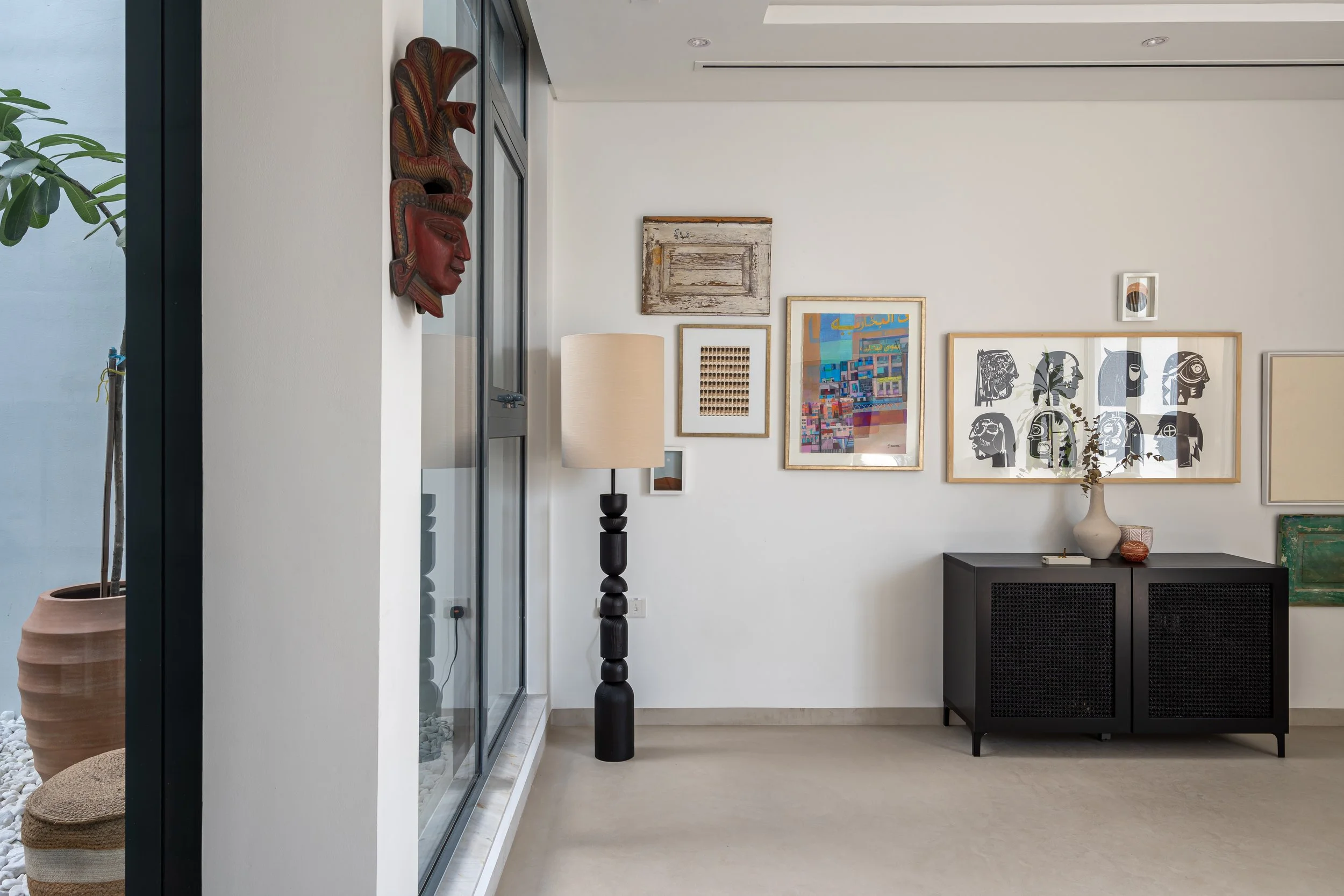
Recently I did an art consultation for a client. He and his partner had just bought a new home. It looked great, but it was missing the feeling of home.
They'd bought a couple of canvases from furniture shops and then stalled. What they had felt generic, with none of their own personality in it. His idea of art was photos of Porsches, which she wasn't quite settling for.
When people come to me about art, they want to start with the wall. The size, the framing, where it goes. That's my work, and I'll handle it. It isn't where you should begin.
Begin with what you want the piece to say about you. Where you've been, what you're moving towards, what you love, what makes you stop and look twice. Those answers are the brief, and you already have them.
Take her love of luxury handbags and his of Porsches. On the surface those point in different directions, but underneath they share the same ingredients: a feel for craftsmanship, an eye for material quality, a pull towards a sense of timeless luxury. Her handbags speak to crafted leather and the care that goes into it. His Porsches speak to engineering and quality that doesn't cut corners.
The literal objects differ, the instincts overlap, and that overlap is what we extrapolate into the answer. The same eye can lead to a beautifully made leatherwork piece, even if a Porsche never reaches the wall. A collection comes alive in how those shared loves get translated, into something far richer than any literal reading of them.
Another blocker I see often has nothing to do with translation. People have absorbed the idea that the art world is a closed room. That collecting means a certain calibre of name, a certain kind of gallery, a set of invisible boxes drawn up by people guarding the door. None of that is the price of entry. What art actually asks of you is simpler: notice what already moves you, and follow that rather than what you think you're supposed to choose.
Visit galleries, fairs, markets, without the pressure to buy. Treat it as getting to know yourself. Make a date of it and pay attention to what brings you joy, what holds you longer than the rest. A theme, a direction, a feeling. That's your starting point.
When you look at a piece, look past whether it suits the sofa. Find out what the artist was working through, what pushes their practice, how the thing was made. That's where a collection starts to hold meaning, and it's far more reachable than the pages of AD suggest.
A photograph you've taken yourself, printed and framed well, can be the most personal piece in a room. It has to hold up on its own, but it can absolutely belong there.
So don't stand in front of the empty wall waiting for certainty. Explore what draws you, get clear on what you value, and make the call. The room that follows becomes readable and cohesive in a way that's entirely yours. It tells you something about the person who lives there.